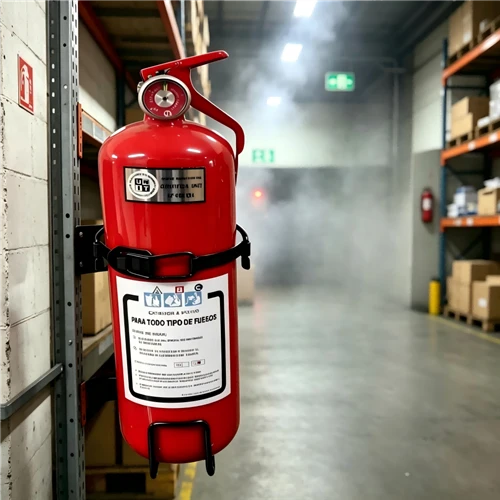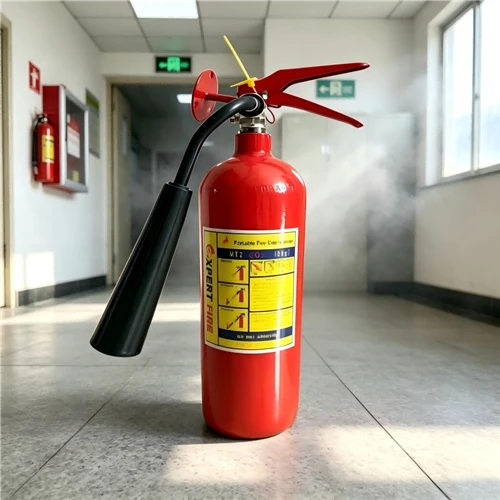
Understanding fire extinguisher labels is essential for selecting the correct product and ensuring effective fire response in any emergency.
The letters, model codes, fire ratings and pressure indicators on a fire extinguisher provide critical data regarding the safe and effective use of the device. Choosing the wrong extinguisher type may result in ineffective firefighting.
Labels provide info on:
- • Applicable fire classes
- • Extinguishing agent type
- • Extinguisher design
- • Firefighting capability
- • Operating condition
Fire Classification Letters A, B, C, and E Explained
The letters marked on fire extinguishers represent different fire sources. Understanding these classifications is the first step in selecting the correct extinguisher.
Class A Fire: Solid Combustible Material Fires
Class A fires involve ordinary combustible materials, including: Wood, Paper, Cotton, Fabric, Furniture, and General waste.
Common Applications: Homes, Offices, Warehouses, Storage areas.
Class B Fire: Flammable Liquid and Meltable Solid Fires
Class B fires involve combustible liquids or materials that can melt when heated. Examples: Gasoline, Diesel, Cooking oil, Paint, Adhesives, and Paraffin wax.
Common Applications: Kitchen oil fires, Vehicle fuel leakage fires, Paint and chemical material storage areas.
Class C Fire: Flammable Gas Fires
Class C fires involve combustible gases. Examples: Natural gas, LPG, Town gas, and Pipeline gas.
Common Applications: Gas leakage fires in kitchens, Gas pipeline emergencies, Gas storage areas.
Class E Fire: Electrical Equipment Fires
Class E fires involve electrical equipment under energized conditions. Examples: Electrical outlets, Distribution panels, Wiring systems, and Electrical equipment.
Common Applications: Short-circuit fires, Electrical equipment overheating, Server rooms and electrical rooms.
Important: Water should not be used on energized electrical fires.
Quick Summary
For general household and commercial applications, ABC dry powder fire extinguishers are one of the most versatile choices. They can handle Class A solid fires, Class B liquid fires, Class C gas fires, and Class E electrical fires. They are widely used because of their broad application range and cost efficiency.
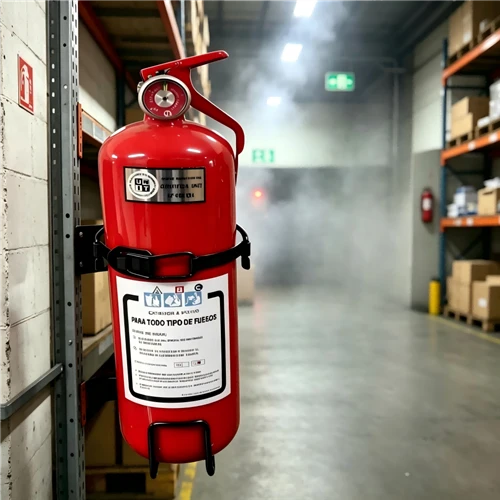
Understanding Fire Extinguisher Model Letters
The letters at the beginning of a fire extinguisher model number indicate the extinguisher category, extinguishing agent and operating design.
M – Fire Extinguisher
Most standard fire extinguisher models begin with the letter M, indicating the product category.
F – Dry Powder Extinguishing Agent
Dry powder extinguishers are widely used in residential buildings, commercial facilities, and industrial areas.
Main features include a wide fire application range, easy storage, and high cost performance.
T – Wheeled Fire Extinguisher
Features include larger cylinder capacity, wheels for mobility, higher extinguishing agent volume, and longer continuous discharge time.
Common applications include factories, warehouses, and large commercial buildings.
Q – Water-Based Fire Extinguisher
Mainly applied for Class A solid fires.
Limitations: Not suitable for oil fires or electrical fires unless specially designed.
CO₂ Fire Extinguisher
Main features include leaving no residue after discharge, no equipment contamination, and suitability for sensitive environments.
Applications: Server rooms, electrical equipment rooms, and precision instruments.
Understanding Numbers on Fire Extinguishers
Numbers on extinguisher labels usually indicate extinguishing agent weight and fire rating capability.
Final Number Indicates Extinguishing Agent Weight
Examples such as MFZ4 or ABC4 signify a dry powder extinguisher with a 4 kg extinguishing agent capacity.
Common sizes for household and vehicle use include 1 kg, 2 kg, 3 kg, and 4 kg.
Commercial applications typically utilize 4 kg, 5 kg, or 8 kg capacities.
Fire Rating Numbers Indicate Extinguishing Capability
Examples include 2A and 55B ratings. The higher the number, the stronger the extinguishing capability:
- 2A provides higher performance than 1A.
- 55B provides higher performance than 21B.
For household applications, selecting extinguishers rated 2A and 55B or above provides better protection for initial-stage fires.
Understanding the Three-Color Pressure Gauge
A pressure gauge provides a quick way to check whether a dry powder fire extinguisher is ready for use.
Green Zone: Normal Operating Condition
Indicates sufficient pressure, proper working condition, and that the device is ready for use.
Yellow Zone: High Pressure Condition
Indicates pressure is slightly above the normal range and requires inspection and maintenance. Avoid storing extinguishers in high-temperature environments.
Red Zone: Unsafe Condition
Indicates insufficient pressure, possible leakage, or that the device is unable to discharge properly. The extinguisher should be refilled, repaired, or replaced immediately.
Essential Fire Extinguisher Selection and Inspection Tips
For homes, offices and vehicles, remember these basic safety rules.
Choose ABC Dry Powder Fire Extinguishers
ABC dry powder extinguishers provide wide protection against solid fires, liquid fires, gas fires, and electrical fires. They are suitable for most common daily fire risks.
Avoid Unqualified Products
A compliant fire extinguisher should include required certifications, clear product labels, a manufacturing date, and a serial identification number. Avoid products without proper identification or certification.
Perform Regular Inspections
Check the following:
- Pressure Gauge: Ensure the pointer remains in the green zone.
- Manufacturing Date: Confirm service life status.
- Cylinder Condition: Check for rust, damage, or deformation.
Understand Service Life Requirements
For portable dry powder fire extinguishers:
- First inspection and refill are generally required after 5 years from manufacturing.
- Maximum service life is generally 10 years before mandatory replacement (requirements may vary according to local regulations).
Correct Fire Extinguisher Operation Method
Knowing the specifications is important, but proper operation is essential during emergencies. Remember the four-step operation method: Pull, Remove, Aim, Press.
Pull
Lift the extinguisher and move toward the fire from the upwind direction.
Remove
Remove the safety pin.
Aim
Hold the discharge hose and aim at the base of the fire.
Press
Press the handle and sweep from side to side until the flame is completely extinguished.
Final Reminder
Selecting the correct fire extinguisher requires understanding:
- Fire classification
- Extinguishing agent type
- Fire rating
- Application environment
- Product condition
Correct selection, regular inspection and proper operation are essential for effective fire protection.