Fire Extinguisher Overview
Fire extinguishers play a critical role in controlling and extinguishing initial-stage fires, helping minimize fire losses and protect lives and property.
Classification by Extinguishing Agent
Common types include:
Water-based fire extinguishers
Dry powder fire extinguishers
Carbon dioxide (CO₂) fire extinguishers
Clean agent fire extinguishers
Classification by Propellant Source
According to the driving force used, these are classified as:
Cartridge-operated fire extinguishers
Stored-pressure fire extinguishers
Chemical reaction-type fire extinguishers
Classification by Mobility
Based on the moving method:
Portable fire extinguishers
Wheeled fire extinguishers
Types and Characteristics of Fire Extinguishers
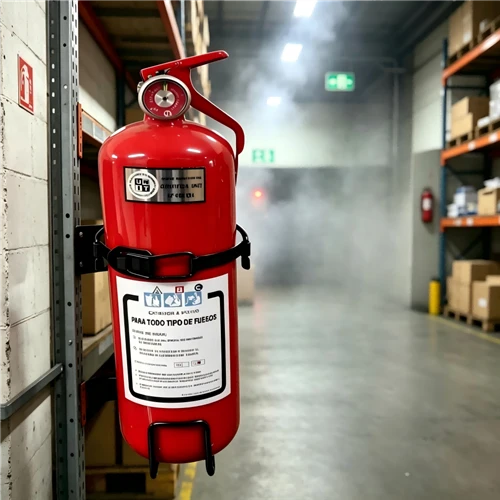
Dry Powder Fire Extinguisher
Dry powder fire extinguishers use dry chemical powder as the extinguishing agent. They are suitable for:
- Flammable liquids
- Flammable gases
- Combustible materials
High extinguishing efficiency, wide application range, and suitable for multiple fire classes.
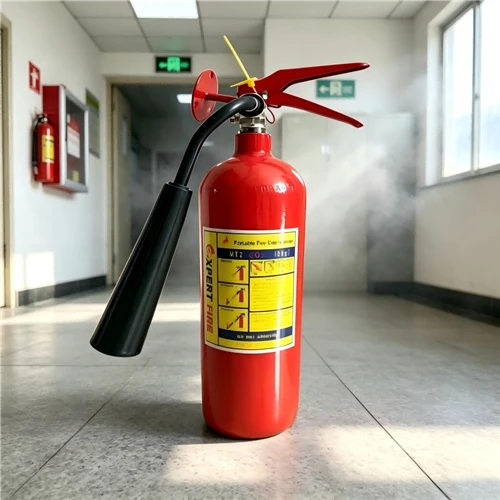
Carbon Dioxide (CO₂) Fire Extinguisher
Used mainly in locations containing valuable equipment, documents, archives, precision instruments, and electrical devices.
Leaves no residue, causes minimal damage to equipment, and is ideal for sensitive areas.
Water-Based Fire Extinguisher
Includes water fire extinguishers and foam fire extinguishers.
Water Fire Extinguisher
Mainly for Class A fires involving solid combustible materials like wood, paper, and textiles.
Foam Fire Extinguisher
Suitable for Class A and Class B fires involving solid materials and flammable liquids.
Service Life of Different Fire Extinguishers
Dry Powder Fire Extinguisher
The typical service life is 10 years. Regular inspection and maintenance are required. Repair or replace if the cylinder is corroded, deformed, or the pressure gauge is outside the green zone.
Carbon Dioxide Fire Extinguisher
The typical service life is 12 years. Inspections should include weight and pressure checks. Refill or replace if weight loss exceeds 10% or pressure is insufficient.
Water-Based Fire Extinguisher
The typical service life is 6 years. Regularly check the nozzle, cylinder, and agent validity. Expired agents must be replaced promptly.

Fire Extinguisher Quantity Calculation
Common Problems in Fire Extinguisher Installation
Common issues include:
- Insufficient training for employees on fire extinguisher operation.
- Inadequate maintenance and management procedures.
- Incorrect extinguisher type selection.
- Insufficient quantity of extinguishers.
- Improper installation locations.
Configuration Standards
The requirements for fire extinguisher configuration calculations are specified in:
Code for Design of Building Fire Extinguisher Configuration (GB50140-2005)
Fire Classification
The standard Classification of Fires (GB/T4968-2008) was issued in 2008 and came into effect on April 1, 2009, replacing the previous GB/T4968-1985 standard. According to this standard, fires are classified into six categories:
Class A Fire
Solid Combustible Material Fire
Involve solid combustible materials such as wood, cotton, paper, and textiles. These materials usually contain organic substances and produce glowing embers after combustion.
Class B Fire
Flammable Liquid or Meltable Solid Fire
Involve gasoline, alcohol, acetone, and other flammable liquids.
Class C Fire
Flammable Gas Fire
Involve combustible gases such as liquefied petroleum gas (LPG), hydrogen, and other flammable gases.
Class D Fire
Metal Fire
Involve combustible metals such as potassium, sodium, magnesium, titanium, and lithium alloys.
Class E Fire
Electrical Fire
Involve electrical equipment or objects carrying electrical current during combustion, such as electrical panels and various electrical equipment.
Class F Fire
Cooking Oil Fire
Involve cooking oils and fats, such as vegetable oils and animal fats used in cooking equipment.
Selection of Fire Extinguishers for Different Fire Classes
| Fire Class | Suitable Fire Extinguisher Types |
|---|---|
| Class A: Solid Combustible Fires | Water extinguishers, ABC dry powder extinguishers, Foam extinguishers, Halogenated extinguishers |
| Class B: Flammable Liquid or Meltable Solid Fires | Foam extinguishers (standard foam for oil fires; alcohol-resistant foam for polar solvents such as alcohol and acetone), ABC dry powder extinguishers, BC dry powder extinguishers, CO₂ extinguishers, Class B rated water-based extinguishers, Halogenated extinguishers |
| Class C: Flammable Gas Fires | ABC dry powder extinguishers, BC dry powder extinguishers, CO₂ extinguishers, Halogenated extinguishers |
| Class D: Metal Fires | Special-purpose metal fire extinguishers designed for combustible metal fires |
| Class E: Electrical Fires | ABC dry powder extinguishers, BC dry powder extinguishers, Halogenated extinguishers, CO₂ extinguishers (do not use CO₂ extinguishers equipped with metal horn nozzles) |
| Class F: Cooking Oil Fires | Wet chemical fire extinguishers specifically designed for cooking oil and fat fires |