Fire extinguishers are safety equipment that must remain ready for immediate use throughout their service life. Proper storage and regular maintenance help prevent problems such as corrosion, pressure loss, blocked discharge components, damaged hoses, and inaccessible equipment.
For distributors, wholesalers, facility managers, engineering contractors, and industrial buyers, fire extinguisher maintenance begins before installation. Products may remain in warehouses, distribution centers, construction sites, or customer facilities for extended periods, so storage conditions and inspection procedures can directly affect product condition and service readiness.
OSHA requires portable fire extinguishers in covered workplaces to be maintained in a fully charged and operable condition and kept in their designated locations. OSHA also requires monthly visual inspections and annual maintenance checks, while hydrostatic testing is required at specified intervals depending on extinguisher type. Local regulations and applicable standards may impose additional requirements.
This guide explains the key precautions for storing, inspecting, maintaining, and managing fire extinguishers for commercial and industrial applications.
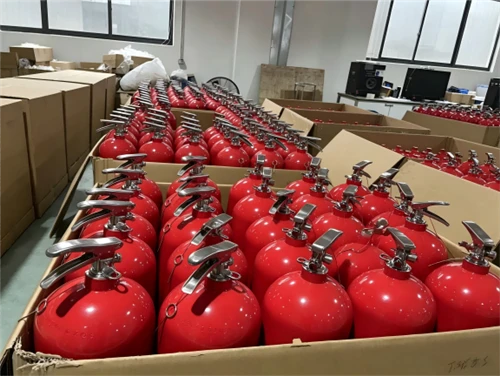
Why Proper Fire Extinguisher Storage and Maintenance Matters
A fire extinguisher may remain unused for years, but it still needs to be maintained in an operable condition. Storage without regular inspection can allow small problems to develop into serious equipment failures.
Common issues include:
- Cylinder corrosion
- Pressure loss
- Damaged valves
- Blocked hoses or nozzles
- Missing safety pins
- Broken tamper seals
- Illegible operating instructions
- Physical impact damage
- Improper storage location
- Extinguishing agent deterioration
For commercial and industrial buyers, these problems can create additional costs after products have already entered the supply chain. A distributor may need to inspect warehouse inventory before shipment, while an end user needs to confirm that installed extinguishers remain accessible and ready for emergency use.
OSHA requires employers to inspect, maintain, and test workplace portable fire extinguishers. Its guidance also specifies that extinguishers should be readily accessible, fully charged, operable, and kept in their designated locations.
How Should Fire Extinguishers Be Stored?
The storage environment should protect extinguishers from conditions that could affect their cylinder, operating components, extinguishing agent, or pressure system.
Keep Extinguishers in a Dry Environment
Fire extinguishers should be protected from unnecessary exposure to moisture and water.
High humidity or direct water exposure can accelerate corrosion of metal components. For long-term warehouse storage, buyers should select a clean, dry, and well-ventilated area rather than an exposed location where products are continuously exposed to rain or condensation.
Avoid Extreme Heat
Fire extinguishers should not be stored close to heat sources unless the specific product is designed and approved for that environment.
Potential heat sources include:
- Boilers
- Furnaces
- Steam equipment
- Direct sunlight through windows
- Industrial heating equipment
Storage conditions should follow the temperature range specified by the extinguisher manufacturer and applicable product standards.
Protect Products from Physical Damage
Fire extinguishers should be stored or mounted in a way that prevents unnecessary impact.
Warehouse handling equipment, falling materials, and improper stacking can damage cylinders, valves, handles, hoses, or pressure gauges.
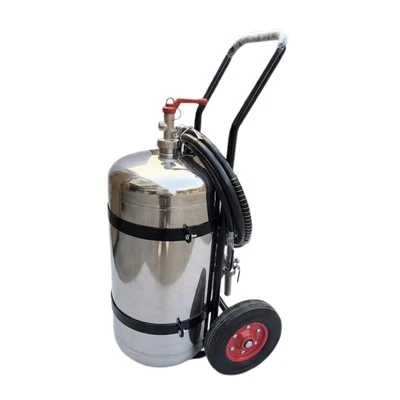
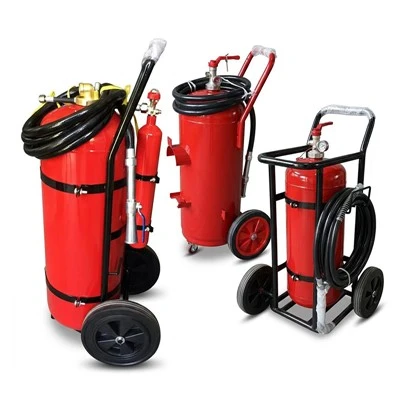
For wheeled extinguishers, particular attention should be paid to the condition of wheels, carriage frames, hoses, and nozzles.
Key Storage Precautions for Fire Extinguishers
Proper storage is not simply about putting extinguishers in a warehouse. Buyers should also consider accessibility, identification, packaging, and inventory management.
Keep Access Clear
Installed extinguishers should remain accessible and visible. Equipment, cartons, furniture, or other materials should not block access to an extinguisher during an emergency.
OSHA specifically requires portable extinguishers to be mounted, located, and identified so they are readily accessible without exposing employees to unnecessary injury.
Keep the Correct Extinguisher in the Designated Location
Once an extinguisher is installed in its designated position, it should not be moved for convenience and left elsewhere.
A missing extinguisher can create a protection gap even when other units remain available in the building.
Protect Identification Labels
Operating instructions, rating information, warning labels, and product markings should remain legible.
For distributors and OEM buyers, labels should also match the destination market and applicable certification requirements.
Follow FIFO Inventory Management
For large warehouse inventories, distributors can use a first-in, first-out inventory system to reduce prolonged storage periods.
Each batch should be traceable through appropriate product identification, production information, inspection records, and shipping documentation.
This is particularly important for distributors handling large quantities of extinguishers for different projects.
What Should Be Checked During Routine Inspection?
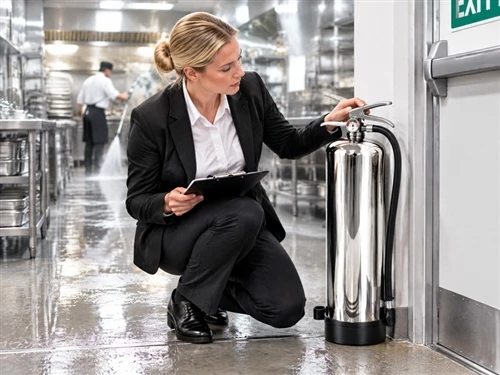
Routine inspection allows buyers and facility managers to identify visible problems before an emergency occurs.
OSHA requires monthly visual inspections for workplace portable extinguishers. Its inspection guidance recommends checking accessibility, visibility, pressure indication, safety pin and tamper seal condition, physical damage, corrosion, leakage, and other visible conditions.
Location
Confirm that every extinguisher remains in its designated location.
Accessibility
Check that no equipment, boxes, vehicles, or other obstacles prevent immediate access.
Physical Condition
Look for:
- Dents
- Cracks
- Corrosion
- Leakage
- Damaged handles
- Damaged valves
- Missing components
Pressure Condition
For extinguishers equipped with pressure gauges, check whether the indicator remains within the specified operating range.
Safety Pin and Tamper Seal
Confirm that the safety pin and tamper seal are intact unless the extinguisher has been used or serviced.
Hose and Nozzle
Check whether the hose, nozzle, or discharge outlet is damaged, blocked, or contaminated.
Labels and Instructions
Operating instructions and identification markings should remain visible and readable.
Wheeled Extinguishers
For trolley-mounted units, inspect:
- Wheels
- Carriage
- Hose
- Nozzle
- Cylinder
- Operating components
NFPA inspection procedures include checks for location, visibility, accessibility, pressure indication, fullness where applicable, and the condition of wheels, carriage, hose, and nozzle for wheeled extinguishers.
Fire Extinguisher Maintenance Requirements
Routine inspection and professional maintenance are different activities.
A visual inspection identifies obvious problems. Maintenance involves more detailed service procedures required to keep the extinguisher operational.
Monthly Visual Inspection
A monthly inspection can identify obvious issues such as:
- Missing safety pins
- Pressure loss
- Corrosion
- Leakage
- Physical damage
- Blocked discharge components
- Poor accessibility
Annual Maintenance
OSHA requires an annual maintenance check for workplace portable fire extinguishers and requires records of the annual maintenance date under its workplace standard.
The actual maintenance procedure depends on the extinguisher type, construction, agent, and applicable local requirements.
Hydrostatic Testing
Hydrostatic testing evaluates the pressure resistance of the extinguisher cylinder or shell.
Testing intervals vary by extinguisher type. Under OSHA's workplace requirements, carbon dioxide extinguishers are listed with a five-year hydrostatic test interval, while several stored-pressure dry chemical extinguisher types have a twelve-year interval. Local fire codes or other applicable standards may establish different requirements.
Hydrostatic testing should be performed by trained personnel using suitable equipment and procedures.
When Should a Fire Extinguisher Be Removed from Service?
An extinguisher should not remain in service simply because it has not been discharged.
The product should be evaluated when there is evidence of:
- Significant corrosion
- Cylinder deformation
- Mechanical damage
- Leakage
- Failed pressure testing
- Damaged critical components
- Missing or illegible identification
- Expired or otherwise non-compliant certification
- Fire exposure
OSHA specifically identifies corrosion causing pitting, damaged cylinder or shell threads, certain repairs, fire exposure, and other conditions as circumstances requiring hydrostatic testing or other action under its standard. Extinguishers that fail hydrostatic testing or are not fit for testing must be removed from service.
When an extinguisher is removed for maintenance or recharge, equivalent protection should be provided where required.
Special Considerations for Different Fire Extinguisher Types
Maintenance procedures should not be treated as identical for every extinguisher.
ABC Dry Powder Fire Extinguishers
For dry powder extinguishers, buyers should pay particular attention to:
- Agent condition
- Pressure
- Hose and nozzle condition
- Cylinder corrosion
- Packing or caking of the powder
- Service history
Long-term storage conditions should prevent moisture from entering the extinguisher and affecting the extinguishing agent.
CO₂ Fire Extinguishers
CO₂ extinguishers use pressurized carbon dioxide rather than a stored-pressure dry chemical system.
Inspection should focus on:
- Cylinder condition
- Valve assembly
- Hose and horn
- Physical damage
- Leakage indicators
- Hydrostatic test status
Because CO₂ cylinders operate under pressure, cylinder integrity and required pressure testing are particularly important.
Wheeled Fire Extinguishers
For trolley-mounted models, maintenance extends beyond the cylinder itself.
Buyers should inspect:
- Wheels
- Frame
- Hose
- Nozzle
- Valve
- Cylinder
- Pull mechanism
This is especially important for industrial facilities where wheeled extinguishers may be moved frequently.
Fire Extinguisher Storage and Maintenance for Bulk Procurement
For B2B buyers, storage and maintenance should be considered during procurement rather than after delivery.
Before Placing an Order
Buyers should confirm:
- Extinguisher type
- Fire rating
- Capacity
- Applicable certification
- Cylinder material
- Working pressure
- Operating temperature range
- Packaging requirements
- Label language
- OEM requirements
- Spare parts availability
During Warehouse Storage
Distributors should establish:
- Dry storage areas
- Batch identification
- Inventory records
- Regular inspection procedures
- Protection from physical impact
- FIFO inventory management
Before Project Delivery
Each batch should be checked for:
- Correct model
- Correct capacity
- Product appearance
- Pressure condition where applicable
- Labels
- Accessories
- Packaging integrity
- Required documentation
This process helps reduce the risk of sending damaged, incorrectly configured, or unsuitable products to a project site.
How Weimin Supports Long-Term Fire Equipment Supply
Shaoxing Weimin Fire Fighting Equipment Co., Ltd. manufactures conventional fire protection equipment for distributors, wholesalers, engineering contractors, and industrial buyers.
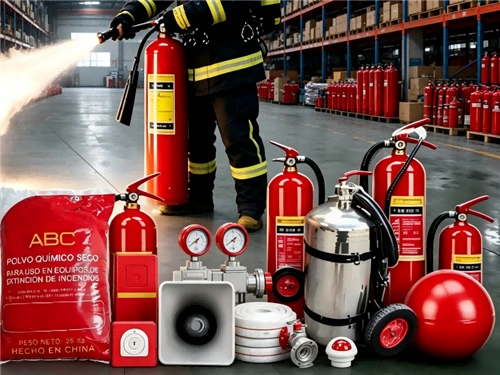
The company's product range includes fire extinguishers, fire hoses, fire cabinets, fire blankets, dry chemical powder, alarms, emergency lights, and related fire protection products.
For large-volume buyers, Weimin supports procurement beyond individual product supply.
Manufacturing and Supply Advantages
- ISO 9001 quality management system
- OEM production support
- Bulk order capability
- Product inspection and quality control
- Export experience across more than 40 regions
- Multiple extinguisher types and capacities
- Packaging and labeling support for international orders
Weimin's conventional fire protection product range allows buyers to consolidate different fire safety products through one manufacturing partner while maintaining consistent procurement communication and product documentation.
For distributors, project contractors, and wholesalers, this can simplify product sourcing across multiple fire protection categories.
Frequently Asked Questions
Q: How should fire extinguishers be stored?
A: Fire extinguishers should be kept in designated, accessible locations and protected from conditions that could cause corrosion, physical damage, pressure problems, or deterioration. Storage conditions should also follow the manufacturer's specified requirements.
Q: How often should fire extinguishers be inspected?
A: OSHA requires monthly visual inspections for workplace portable fire extinguishers covered by its standard, while annual maintenance is also required. Additional testing requirements depend on the extinguisher type and applicable regulations.
Q: What should be checked during a fire extinguisher inspection?
A: Check the extinguisher's location, accessibility, physical condition, pressure indication where applicable, safety pin, tamper seal, hose, nozzle, labels, and signs of corrosion or leakage.
Q: When should a fire extinguisher be replaced?
A: An extinguisher may need to be removed from service when it has serious corrosion, mechanical damage, leakage, failed pressure testing, damaged critical components, or other conditions that make it unsuitable for safe operation.
Q: Do CO₂ fire extinguishers require hydrostatic testing?
A: Yes. Under OSHA's workplace requirements, CO₂ extinguishers are listed with a five-year hydrostatic test interval. Buyers should also check the regulations and standards applicable in the destination market.
Q: How should fire extinguishers be stored in a warehouse?
A: Warehouse inventory should be kept in a clean, dry, organized area protected from excessive heat, moisture, impact, and other damaging conditions. Products should remain identifiable and accessible for inspection and inventory management.
Q: What should distributors check before shipping fire extinguishers?
A: Distributors should verify the model, capacity, fire rating, product condition, pressure condition where applicable, labels, accessories, packaging, certification documents, and project-specific requirements before shipment.