Fire safety is becoming increasingly connected. Smart fire safety systems can monitor equipment status, detect abnormal conditions, transmit alerts and support centralized management. However, digital monitoring does not replace the need for reliable physical fire protection equipment.
Traditional fire protection products such as fire extinguishers, fire hoses, fire hose cabinets, fire extinguisher cabinets and fire blankets remain essential in many commercial, industrial, residential and public facilities. They provide direct access to firefighting equipment when immediate action is required.
For distributors, importers, contractors and project purchasers, understanding the difference between traditional fire protection and smart fire safety can help determine which products are appropriate for a particular application.
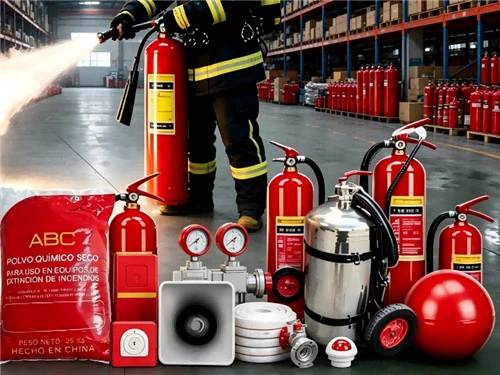
What Are Traditional Fire Protection Products?
Traditional fire protection products are physical devices designed to help control, contain or fight a fire. They generally operate without depending on a digital network or centralized software platform.
Common examples include:
- Portable fire extinguishers
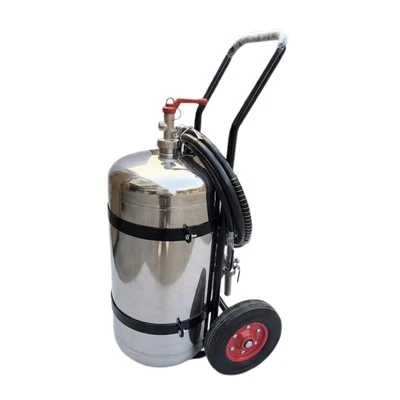
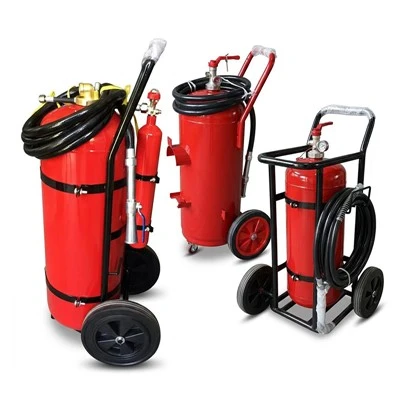
- Wheeled fire extinguishers
- Fire hoses
- Fire hose reels and cabinets
- Fire extinguisher cabinets
- Fire blankets
- Fire hydrant equipment
- Related fire protection accessories
The main characteristic of traditional fire protection equipment is direct availability. When a fire occurs, users can access the equipment and operate it according to the product's intended application.
For many facilities, this straightforward approach remains practical because the equipment can be installed close to potential fire hazards without requiring a complex digital infrastructure.
Traditional Fire Protection vs. Smart Fire Safety
Traditional and smart fire safety products serve different functions. Traditional equipment primarily provides physical firefighting capability, while smart systems focus more on detection, monitoring, communication and management.
Comparison Overview
| Consideration | Traditional Fire Protection | Smart Fire Safety |
|---|---|---|
| Primary purpose | Physical fire protection and firefighting | Detection, monitoring and management |
| Operation | Usually direct or manual | Can include automated or remote functions |
| Connectivity | Generally not network-dependent | Commonly uses sensors, networks or software |
| Main components | Mechanical and physical equipment | Sensors, communication devices, software and equipment |
| Maintenance | Mainly physical inspection and servicing | Equipment, connectivity and software may all require maintenance |
| Installation | Generally straightforward | May require system integration |
| Best suited to | Direct firefighting and standardized protection | Monitoring and centralized fire safety management |
| Procurement | Often suitable for standardized and bulk orders | Often depends on project requirements and system integration |
Working Together
This does not mean that one approach should completely replace the other. In many modern facilities, smart monitoring and traditional firefighting equipment can work together.
A smart system may identify a potential fire-related problem, while a properly positioned extinguisher, hose or hydrant provides the physical means to respond.
Why Traditional Fire Protection Equipment Remains Essential
Immediate Physical Protection
The primary advantage of traditional fire protection equipment is its physical availability.
A fire extinguisher does not need a network connection before it can be used. A fire hose does not depend on software to provide access to firefighting water. A fire cabinet can keep essential equipment organized and accessible at a designated location.
This makes traditional equipment particularly important as part of the basic physical layer of a fire protection strategy.
Straightforward Operation
Many traditional products are designed around direct operation.
For example, portable extinguishers can be positioned near areas where fire risks may exist, while fire hoses and cabinets can be installed at designated locations according to project requirements.
Simple operation can be particularly valuable in environments where users need to respond quickly and where complex interfaces could create unnecessary steps.
Of course, the correct product type, installation method, inspection procedure and user training remain important.
Easier Deployment
Traditional fire protection equipment can often be deployed independently at specific locations.
A distributor may need to supply standardized extinguishers in several capacities. A contractor may require fire hose assemblies for a building project. A facility operator may need cabinets to protect and organize firefighting equipment.
These requirements can often be addressed through clearly defined product specifications rather than a complete digital system.
Practical for Standardized Procurement
Traditional fire protection products are commonly purchased according to measurable specifications.
This makes them suitable for distributors, importers and project purchasers who need consistent products across multiple orders.
For larger procurement projects, product consistency, production capacity, inspection procedures and delivery reliability can be just as important as the product specification itself.
When Should Buyers Choose Traditional Fire Protection Equipment?
Traditional equipment can be a practical choice when the main requirement is reliable physical fire protection rather than centralized digital monitoring.
Commercial buildings
Offices, retail facilities and other commercial properties may require accessible extinguishers, fire hoses and cabinets at designated locations.
Warehouses and industrial facilities
Different production and storage areas may require firefighting equipment selected according to the potential fire hazards and project specifications.
Residential developments
Property developers and contractors may need standardized fire protection products for multiple buildings or units.
Hotels, schools and public facilities
These environments often require clearly accessible firefighting equipment that can be inspected and maintained through established procedures.
Distributor and importer supply
Distributors may prefer standardized products that can be ordered repeatedly, packaged under private labels and supplied according to their market requirements.
The appropriate choice should always be determined by the applicable local regulations, fire risks, installation requirements and project specifications.
What Should Buyers Check Before Purchasing Fire Protection Equipment?
Choosing a fire protection product should involve more than comparing appearance and unit price.
Product Specifications
Confirm the required capacity, material, dimensions, operating characteristics and intended application before placing an order.
For fire extinguishers: Buyers may need to consider the extinguishing agent, fire rating, cylinder construction, valve configuration and operating temperature range.
For fire hoses: Important factors can include diameter, length, material, working pressure, coupling type and application.
For fire cabinets: Buyers may need to confirm dimensions, material, installation method, door configuration and indoor or outdoor use.
Applicable Standards and Certifications
Fire protection equipment may need to comply with specific standards or certification requirements depending on the destination market and application.
Buyers should identify the required standards before production rather than treating certification as an afterthought.
The exact certification requirements should be confirmed according to the destination country, product category and project specification.
Manufacturing and Quality Control
Consistent manufacturing is critical when purchasing fire protection equipment in volume.
A reliable production process should include appropriate control of materials, component processing, assembly, testing, surface treatment and final inspection.
For pressure-bearing products, pressure and leakage testing are particularly important because product performance cannot be evaluated through appearance alone.
OEM and Private-Label Capability
Distributors and brand owners may require:
- Custom logos
- Product labels
- Packaging
- Cylinder printing
- Product colors
- Customized specifications
- Private-label production
A manufacturer with an established OEM process can help buyers maintain consistent branding across different product batches.
How Manufacturing Quality Affects Fire Protection Equipment Reliability
The quality of a finished fire protection product is closely related to the manufacturing process behind it.
A typical quality-control process may include:
- Raw Material Inspection: Materials and purchased components are checked before entering production.
- Component Processing: Metal components and other parts are processed according to the required dimensions and specifications.
- Welding and Assembly: Components are assembled using controlled production procedures.
- Pressure and Leakage Testing: Pressure-bearing products can be tested to identify potential leakage or structural problems.
- Surface Treatment: Painting or coating helps provide the required surface finish and protection.
- Final Inspection: Finished products are checked before shipment to verify specifications, appearance and packaging.
- Packaging and Shipment: Products are packaged according to transportation and customer requirements to reduce the risk of damage during delivery.
For buyers, this process provides a more meaningful way to evaluate a manufacturer than simply looking at product photographs.
Why Choose Shaoxing Weimin Fire Fighting Equipment Co., Ltd.?
Shaoxing Weimin Fire Fighting Equipment Co., Ltd. focuses on the manufacturing and supply of fire protection products for international markets.
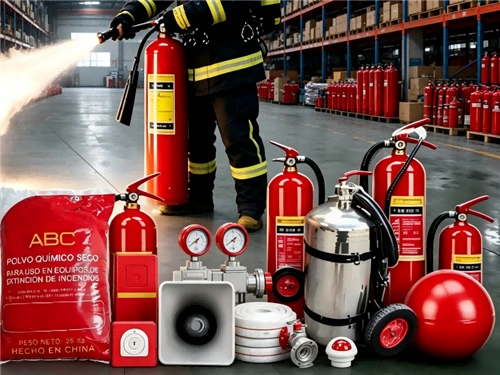
Its product range includes fire extinguishers, fire hoses, plastic fire extinguisher cabinets, fire blankets, dry chemical powder and related fire protection products.
Comprehensive Product Range
A broad product portfolio allows buyers to source multiple categories from one manufacturing partner instead of coordinating every product with a different supplier.
This can be useful for distributors, contractors and project procurement teams that require several types of fire protection equipment for the same market or project.
Established Fire Extinguisher Manufacturing
Weimin Fire has more than 15 years of fire extinguisher manufacturing experience. Its production and inspection processes cover key stages including raw material inspection, welding, painting, assembly, filling, pressure safety testing, leakage testing and final inspection.
For buyers, this production structure provides a clearer basis for evaluating product consistency and manufacturing control.
Fire Hose Manufacturing Capability
The company produces different types of fire hoses, including PVC, rubber-lined and woven-jacket hoses.
Its production process includes hose manufacturing, lining or coating and pressure testing. Specifications such as diameter, length, pressure rating, branding and packaging can be considered according to project requirements.
Fire Cabinet Options
Weimin Fire supplies plastic fire extinguisher cabinets made from materials such as PE and ABS. Different structures and installation configurations are available for applications requiring wall-mounted, recessed or other project-specific solutions.
OEM sizes, colors, structures, branding and packaging can also be considered for qualified orders.
Quality Control and Export Experience
The company states that it operates an ISO 9001-certified quality management system and carries out shipment inspection. Its products are supplied to customers in more than 40 countries across regions including Europe, Africa, Southeast Asia, the Middle East and South America.
This international supply experience is relevant to buyers who need products prepared for overseas distribution, project procurement or private-label programs.
OEM and Project Support
For distributors and brand owners, Weimin Fire provides OEM and private-label support, including logo marking, customized packaging and branding requirements.
For project-based procurement, product configurations can be developed according to specified requirements, while its engineering team can support international tender and project-related needs.
Can Traditional and Smart Fire Safety Work Together?
Yes. Traditional and smart fire safety should not necessarily be viewed as competing technologies.
Complementary Roles
Smart systems can improve visibility by monitoring alarms, sensors, equipment status and other safety information.
Traditional equipment provides the physical tools required for firefighting and emergency response.
Comprehensive Fire Safety Strategy
A comprehensive fire safety strategy may therefore use both layers:
- Smart systems: Detect, monitor and communicate
- Traditional equipment: Protect, contain and fight
Practical Application & Implementation
For example, a facility may use a smart fire alarm system to identify a potential fire while maintaining fire extinguishers, hoses, cabinets and hydrant equipment at appropriate locations.
The right combination depends on the building type, fire risk, regulations, project requirements and available infrastructure.
Frequently Asked Questions
Are traditional fire protection products still necessary when a building uses smart fire safety systems?
Yes. Smart systems can improve detection and monitoring, but they do not eliminate the need for physical firefighting equipment. Fire extinguishers, hoses and other equipment remain an important part of emergency response.
What are the main advantages of traditional fire protection equipment?
The main advantages include direct operation, straightforward deployment, relatively simple maintenance procedures and suitability for standardized procurement.
What should I consider when buying fire extinguishers in bulk?
Consider the required capacity, extinguishing agent, fire rating, cylinder material, valve configuration, applicable standards, inspection procedures, packaging and OEM requirements.
Can fire protection products be customized for private-label brands?
Many manufacturers offer OEM or private-label services. Buyers should confirm available customization options for logos, labels, colors, packaging and product specifications before ordering.
Is traditional fire protection better than smart fire safety?
Neither is universally better. They address different requirements. Traditional equipment provides physical firefighting capability, while smart systems focus on detection, monitoring and management. In many facilities, they can complement each other.
Conclusion
Smart technology is changing how fire safety systems are monitored and managed, but reliable physical protection remains essential.
The Role of Traditional Products
Traditional fire protection products provide direct access to firefighting equipment without making physical response dependent on a digital network.
Their straightforward operation, flexible deployment and standardized specifications also make them practical for many commercial, industrial, residential and public applications.
Evaluation Approach
For buyers, the key is not simply choosing between "traditional" and "smart."
A better approach is to evaluate the actual fire risks, applicable standards, installation conditions, maintenance requirements and procurement objectives.
Selecting a Manufacturer
For distributors, importers, contractors and project purchasers, selecting a manufacturer with controlled production, reliable testing, consistent quality, OEM capability and international supply experience can be just as important as selecting the product itself.
Foundation of Reliability
Reliable fire protection begins with equipment that is available, correctly specified, properly maintained and manufactured to consistent quality standards.