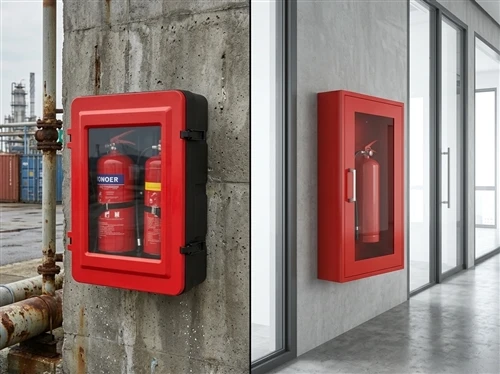
Choosing the right fire extinguisher cabinet involves more than selecting a suitable size or color. For fire protection distributors, contractors, importers, and project buyers, cabinet material can affect corrosion resistance, handling, maintenance, installation, and long-term use.
Metal fire extinguisher cabinets are commonly made from carbon steel or stainless steel. Plastic alternatives, typically manufactured from materials such as ABS or polyethylene (PE), offer another option for projects where moisture exposure, cabinet weight, or maintenance requirements are important considerations.
So, which type is more suitable for your project? This guide compares plastic and metal fire extinguisher cabinets, explains the differences between ABS and PE, and outlines the key specifications buyers should check before placing bulk orders.
Why Does Cabinet Material Matter in Fire Protection Projects?
Fire extinguisher cabinets protect and identify portable extinguishers while keeping them accessible at designated locations. Their material should therefore match the installation environment, extinguisher dimensions, and project requirements.
For example, carbon steel cabinets may require protective coatings to reduce corrosion. If the coating is scratched or damaged, the exposed metal may be vulnerable to rust, particularly in humid or corrosive environments. Stainless steel offers better corrosion resistance than ordinary carbon steel, but its performance depends on the steel grade and operating conditions.
Plastic cabinets provide an alternative for projects where rust prevention and reduced cabinet weight are priorities. They are often considered for commercial buildings, industrial facilities, warehouses, public areas, and selected outdoor installations.
The right choice depends on the actual application. Buyers should evaluate material properties alongside structural strength, installation conditions, access requirements, and any applicable project specifications.
Plastic vs. Metal Fire Extinguisher Cabinets: Key Differences
Plastic and metal cabinets serve the same basic purpose, but their material characteristics create different purchasing considerations.
| Comparison | Plastic Cabinets | Metal Cabinets |
|---|---|---|
| Common materials | ABS, PE and other engineered plastics | Carbon steel, stainless steel, aluminum |
| Corrosion | Plastic does not rust; chemical resistance depends on the resin | Carbon steel may rust if its protective coating is damaged |
| Weight | Generally lightweight | Usually heavier, depending on material and thickness |
| Surface maintenance | No metal rust or paint corrosion | Coating condition may need inspection |
| Design options | Flexible molding, shapes, and color options | Fabricated shapes, finishes, and metal thickness options |
| Structural performance | Depends on resin, wall thickness, and cabinet design | Generally rigid; depends on metal grade and construction |
Plastic cabinets can reduce rust-related maintenance and simplify handling. Metal cabinets may be more suitable where higher structural rigidity, specific fire-rated construction, or project-mandated metal materials are required.
Importantly, not every cabinet is suitable for every installation. For example, a recessed cabinet installed in a fire-rated wall may need a tested and listed fire-resistance assembly. Buyers should verify the required cabinet rating and installation details rather than assuming that a material alone meets the project specification.
Five Practical Advantages of Plastic Fire Extinguisher Cabinets
No Rust Formation on the Plastic Cabinet Body
One of the main advantages of plastic fire extinguisher cabinets is that the plastic body does not develop rust like carbon steel.
This can be useful in locations exposed to humidity, rain splash, cleaning water, or coastal air. It also avoids the need to repaint the plastic body because of metal corrosion.
For distributors and facility operators, this can reduce rust-related maintenance work over the cabinet's service life. However, hinges, locks, fasteners, and other metal components should still be checked for corrosion and wear.
Lightweight Construction for Easier Handling
Plastic cabinets are generally lighter than comparable metal cabinets. This can make them easier to handle during warehousing, transportation, and on-site installation.
For contractors working across multiple buildings or installation points, lower cabinet weight can simplify manual handling. For importers and distributors, product weight is also relevant when calculating shipment weight and handling arrangements.
Actual weight varies by cabinet dimensions, resin, wall thickness, and design, so buyers should request the product's net weight before comparing models.
Lower Rust-Related Maintenance Requirements
Metal cabinets may need coating inspections and repairs when the protective finish is damaged. Plastic cabinet bodies do not require this type of rust-related repainting.
Their surfaces are also generally easy to clean. This can be useful for commercial and industrial facilities that need to maintain the appearance and accessibility of fire protection equipment.
Plastic cabinets are not maintenance-free, however. Doors, hinges, latches, locks, labels, and mounting points still need routine inspection. Outdoor cabinets should also be checked for damage, water or dust intrusion, and deterioration according to the manufacturer's instructions.
Flexible Molding for Different Cabinet Designs
Plastic molding allows manufacturers to produce cabinet bodies with different shapes, dimensions, and design details.
Depending on the product design, buyers may be able to select different cabinet sizes, colors, door structures, and mounting arrangements. Molded edges can also avoid some of the sharp corners associated with fabricated sheet-metal products.
For wholesalers and project suppliers, a range of cabinet configurations can help serve customers with different extinguisher capacities and installation requirements.
Suitable Options for Selected Humid and Outdoor Environments
Plastic materials do not corrode in the same way as carbon steel, making them worth considering for some humid or exposed locations.
However, outdoor performance depends on more than whether a cabinet is made of plastic. UV exposure, temperature changes, impact resistance, drainage, door sealing, and hardware quality all affect service performance.
Buyers specifying outdoor plastic fire extinguisher cabinets should request evidence of the relevant weathering and material tests for the exact model. Do not assume that every ABS or PE cabinet is automatically UV-resistant, waterproof, or suitable for all climates.
ABS vs. PE Fire Extinguisher Cabinets: How to Choose?
ABS and PE are two plastic material options used in cabinet manufacturing. They have different characteristics, so selection should be based on the intended design and installation conditions.
ABS Fire Extinguisher Cabinets
ABS is commonly selected for molded products that require a balance of rigidity, surface finish, and design flexibility.
For fire extinguisher cabinets, buyers should evaluate:
- Cabinet wall thickness and overall rigidity
- Door structure and opening mechanism
- Impact resistance of the finished cabinet
- Compatibility with transparent panels or other door components
- Mounting structure and installation dimensions
ABS cabinets may suit projects where cabinet shape, surface appearance, and structural design are important.
PE Fire Extinguisher Cabinets
Polyethylene is valued for moisture resistance, chemical resistance, and lightweight construction. It can be considered for applications where exposure to moisture or corrosive conditions is a concern.
Before selecting a PE cabinet, buyers should confirm:
- PE grade and material specifications
- Cabinet wall thickness and structural design
- Impact performance at the expected operating temperature
- UV resistance if installed outdoors
- Compatibility with the required extinguisher size
Neither material is universally better. The appropriate choice depends on the cabinet design, project environment, and verified product performance.
What Should Buyers Check Before Bulk Purchasing Plastic Fire Extinguisher Cabinets?
For importers, wholesalers, distributors, and fire protection contractors, checking product specifications before ordering can help prevent installation problems and costly replacements.
1. Extinguisher Compatibility: Confirm that the cabinet's internal dimensions accommodate the extinguisher's height, diameter, and required removal space. Do not select a cabinet based only on the extinguisher's nominal kilogram capacity.
2. Cabinet Dimensions: Check external and internal dimensions, including the available space for the extinguisher handle, hose, and operating components.
3. Material and Wall Thickness: Request the material grade and wall-thickness specifications. These details help buyers compare products beyond their appearance.
4. Installation Method: Confirm whether the cabinet is designed for surface mounting, recessed installation, or another specified method. Check mounting points and installation clearances.
5. Environmental Suitability: For outdoor or demanding environments, ask for relevant evidence covering UV exposure, temperature range, impact resistance, and protection against water and dust intrusion.
6. Access and Identification: Check door opening, locking arrangements, labels, visibility, and whether the extinguisher can be removed quickly when needed.
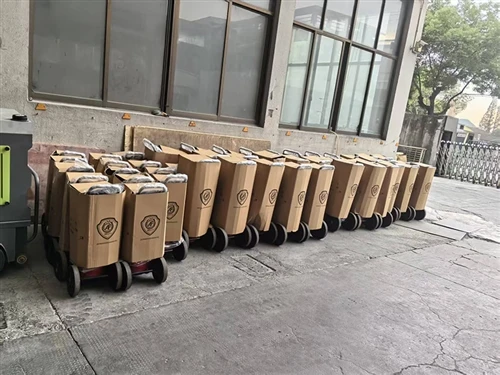
7. Packaging and Bulk Supply: Confirm individual packaging, carton dimensions, loading quantity, product identification, and the supplier's ability to maintain consistent specifications across repeat orders.
For projects with special requirements, buyers should also check local fire codes, building specifications, and any required product approvals before finalizing the cabinet selection.
Weimin Plastic Fire Extinguisher Cabinets for Wholesale and Project Supply
Shaoxing Weimin Fire Fighting Equipment Co., Ltd. supplies fire protection products for international distributors, wholesalers, and project buyers. Its product range includes PE and ABS fire extinguisher cabinets for different extinguisher capacities and installation requirements.
PE Fire Extinguisher Cabinet Options
Weimin offers PE cabinet options for different extinguisher sizes:
6KG PE Fire Extinguisher Cabinet: 700 × 300 × 253 mm, designed for compatible 4kg and 6kg extinguishers.
12KG PE Fire Extinguisher Cabinet: 830 × 310 × 263 mm, designed for compatible 9kg and 12kg extinguishers.
Buyers should confirm the extinguisher's actual dimensions and the cabinet's internal clearance before ordering.
ABS Fire Extinguisher Cabinet Options
Weimin also offers ABS fire extinguisher cabinet configurations. Buyers can evaluate the cabinet material, wall thickness, panel design, and installation requirements according to the intended project.
For orders requiring specific dimensions or configurations, confirm the available options with the sales team before production.
Manufacturing and Quality Support
With an ISO 9001 quality management system, Weimin supports bulk supply and OEM requirements for fire protection products. Its team includes production and quality-control personnel, supporting product checks and order coordination.
For wholesale and project orders, buyers can discuss product specifications, packaging, labeling, and other confirmed customization requirements before placing an order.
Conclusion: Is a Plastic Fire Extinguisher Cabinet the Right Choice?
Plastic fire extinguisher cabinets are worth considering when corrosion resistance, lightweight construction, and reduced rust-related maintenance are important purchasing factors. ABS and PE provide different material options for different cabinet designs and operating conditions.
Metal cabinets remain relevant where project specifications require particular structural or fire-rated performance. The best choice is therefore the one that meets the installation environment, extinguisher dimensions, applicable regulations, and project budget.
If you are sourcing PE or ABS fire extinguisher cabinets for wholesale distribution or a fire protection project, contact Weimin to confirm available models, dimensions, material specifications, and bulk order requirements.
Frequently Asked Questions
Q: Are plastic fire extinguisher cabinets better than metal cabinets?
A: Not in every application. Plastic cabinets offer advantages in rust prevention and weight, while metal cabinets may provide greater rigidity or meet specific fire-rated construction requirements. Buyers should compare the actual product specifications and project requirements.
Q: Are PE fire extinguisher cabinets suitable for outdoor use?
A: PE does not rust and offers moisture resistance, but outdoor suitability depends on UV resistance, temperature performance, cabinet structure, and sealing design. Request model-specific test data before specifying a cabinet for outdoor installation.
Q: What is the difference between ABS and PE fire extinguisher cabinets?
A: ABS is often selected for rigidity, surface finish, and molded design flexibility. PE is valued for moisture and chemical resistance. The final choice should be based on material grade, cabinet construction, and installation conditions.
Q: How do I choose the correct cabinet size?
A: Check the extinguisher's actual height, diameter, handle, hose, and removal clearance against the cabinet's internal dimensions. Nominal extinguisher capacity alone is not enough to confirm compatibility.
Q: Can I order plastic fire extinguisher cabinets in bulk?
A: Yes. Buyers should confirm available models, material specifications, dimensions, packaging, order quantity, lead time, and any customization requirements with the supplier before placing a bulk order.