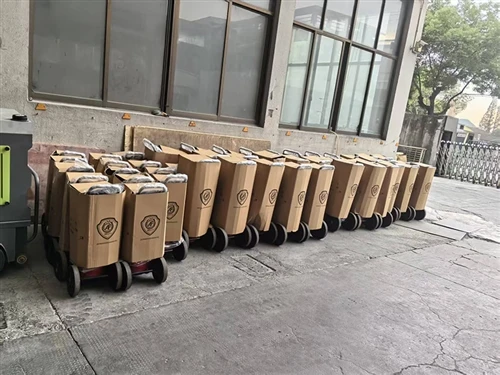
Choosing the right CO2 fire extinguisher for commercial use requires more than selecting a cylinder by capacity. Different commercial environments have different fire hazards, and buyers need to consider fire classification, extinguisher rating, CO2 charge weight, technical specifications and installation conditions before making a purchasing decision.
CO2 fire extinguishers are commonly used for certain flammable-liquid fires and electrical equipment fire risks where the product carries the appropriate rating. Their clean discharge leaves no dry chemical powder residue, making them a consideration for areas containing sensitive electrical equipment.
For importers, wholesalers, distributors and commercial project buyers, understanding CO2 fire extinguisher selection helps ensure that the products match the intended applications and purchasing requirements. This guide covers the key factors to evaluate when choosing commercial CO2 fire extinguishers and sourcing them in bulk.

Understand the Applications of CO2 Fire Extinguishers in Commercial Buildings
The first step in CO2 fire extinguisher selection is identifying the types of fire risks present in the building. CO2 extinguishers are generally designed for Class B flammable-liquid fires and Class C electrical fires under classification systems that use these categories. Buyers should always check the specific product's fire rating and the requirements of the destination market.
CO2 Fire Extinguishers for Electrical Equipment
Electrical rooms, server rooms, control panels and machinery areas may contain energized electrical equipment. Where the extinguisher has the required electrical-fire rating, CO2 can be considered for these applications.
One important advantage of a CO2 fire extinguisher for electrical equipment is that it does not discharge dry chemical powder. This can reduce powder residue around sensitive equipment and the cleaning work that may follow an incident.
However, buyers should verify the extinguisher's rating, discharge horn design, product approval and local requirements before specifying it for electrical protection.
CO2 Fire Extinguishers for Flammable Liquid Risks
CO2 extinguishers may also be suitable for certain flammable-liquid fire risks, including those involving fuels, solvents, paints and other combustible liquids, provided the product carries the required rating.
Typical commercial applications may include:
- Maintenance and repair workshops
- Machinery and equipment rooms
- Areas where flammable liquids are handled
- Industrial electrical and control areas
- Certain commercial equipment spaces
The actual extinguisher type and rating should be selected according to the fire risk assessment and applicable fire safety regulations.
Where CO2 Fire Extinguishers May Not Be Suitable
CO2 is generally not recommended as the sole protection for ordinary Class A combustible materials, such as wood, paper, textiles and some plastics. These materials may continue to smolder and reignite after the CO2 has dispersed.
CO2 also displaces oxygen. Discharging it in a confined or poorly ventilated space can create a serious hazard for occupants. Strong air movement may also disperse the agent and reduce its effectiveness.
Therefore, a commercial CO2 fire extinguisher should be selected for the hazards it is rated to protect, rather than treated as a universal fire protection product.
Identify Fire Risks in Different Commercial Environments
A commercial building may contain several types of fire hazards. Buyers should evaluate each area separately before deciding where CO2 fire extinguishers are appropriate.
| Commercial environment | Potential fire risks | CO2 fire extinguisher selection considerations |
|---|---|---|
| Office buildings | Electrical equipment, office electronics and combustible materials | Consider rated CO2 protection for suitable electrical risks, alongside appropriate Class A protection |
| Server rooms | Electrical equipment and sensitive electronic systems | Check electrical-fire rating, discharge design and room ventilation |
| Workshops | Electrical machinery, flammable liquids and combustible materials | Match extinguisher types to the different hazards present |
| Industrial facilities | Motors, control panels, machinery and process-related risks | Review fire hazards, access routes and applicable requirements |
| Retail premises | Electrical equipment, packaging and general combustible materials | Do not rely on CO2 alone where ordinary combustibles are present |
This assessment helps determine where a commercial CO2 fire extinguisher is appropriate and where other extinguisher types are also required.
The number, capacity and placement of extinguishers should follow a site-specific fire risk assessment and the relevant local regulations. Floor area alone is not enough to determine the required extinguisher capacity or quantity.
Compare CO2 Fire Extinguisher Sizes and Capacities
CO2 fire extinguishers are available in different charge weights and configurations. Choosing the right CO2 fire extinguisher size depends on the fire hazard, required fire rating, installation location, handling requirements and local standards.
Portable CO2 Fire Extinguishers
Portable CO2 extinguishers are commonly considered for offices, electrical rooms, workshops and other areas where personnel need to carry and operate the unit manually.
When comparing portable CO2 fire extinguisher sizes, buyers should review:
- CO2 charge weight
- Certified fire rating
- Cylinder dimensions and total weight
- Discharge hose and horn configuration
- Mounting and storage requirements
- Applicable product approvals
A larger charge weight does not automatically mean that an extinguisher is suitable for every application. Buyers should compare the certified fire rating and technical specifications rather than selecting a model based on capacity alone.
Larger-Capacity and Wheeled CO2 Fire Extinguishers
Larger-capacity and wheeled CO2 fire extinguishers may be considered for industrial areas or locations where a higher-capacity unit is required.
Before selecting a wheeled CO2 extinguisher, buyers should consider:
- Whether the unit can reach the intended fire area
- Available access width and floor conditions
- Storage and parking space
- Operator handling requirements
- The required fire rating and applicable standards
Shaoxing Weimin Fire Fighting Equipment Co., Ltd. offers different CO2 extinguisher options, including portable and larger-capacity models. Buyers can review the available configurations and product specifications on the CO2 Fire Extinguisher product page.
Check CO2 Fire Extinguisher Ratings and Technical Specifications
For commercial projects and wholesale purchasing, reviewing the technical datasheet is an essential part of product evaluation. The nominal capacity and external appearance are not enough to establish whether a CO2 fire extinguisher meets the project requirements.
CO2 Charge Weight
CO2 charge weight refers to the mass of carbon dioxide contained in the cylinder. Buyers should confirm the specified charge weight and permitted filling tolerance against the product documentation and applicable requirements.
CO2 Fire Extinguisher Rating
The fire rating indicates the extinguisher's tested performance under the relevant standard. It helps buyers determine whether a specific model is suitable for the intended fire risk.
When comparing CO2 fire extinguishers, check the rating shown on the product label and supporting documentation. Do not assume that two models with similar charge weights have identical fire performance.
Cylinder Material and Construction
Cylinder material and construction affect the product's pressure-related performance and compliance. Buyers should check:
- Cylinder material
- Design and manufacturing markings
- Relevant cylinder documentation
- Applicable conformity and inspection records
The selected cylinder must meet the requirements applicable to the product and destination market.
Working Pressure and Test Pressure
Working pressure and test pressure are important technical specifications for CO2 fire extinguishers. Buyers should verify both values against the technical datasheet and supporting documentation for the exact model.
For example, Weimin's 6kg CO2 fire extinguisher model WM03-11 has a 9L cylinder, CK45 steel construction, a 174 bar working pressure and a 250 bar test pressure. These specifications apply to this particular model and should not be treated as standard values for every CO2 extinguisher.
Dimensions and Total Weight
Cylinder dimensions and total product weight affect installation, handling, storage and transportation. For bulk orders, these specifications also help importers estimate carton dimensions, pallet arrangements and shipping requirements.
Before confirming an order, request a model-specific datasheet and check that the product specifications, labels and supporting documents are consistent.
Consider Installation and Operating Conditions
Even a correctly rated CO2 fire extinguisher may not be suitable for every installation environment. Buyers should consider the following conditions when planning commercial fire protection.
Accessibility: Extinguishers should be installed in designated, clearly identifiable locations without obstructions. Follow local requirements for mounting, signage, inspection and access.
Ventilation: CO2 displaces oxygen. Confined and poorly ventilated spaces require careful risk assessment and appropriate safety procedures.
Air movement: Strong wind and air currents can disperse CO2 before it suppresses the fire. Consider the environment when deciding whether a CO2 extinguisher is suitable.
Temperature and storage: Check the operating temperature range and storage conditions specified for the selected model.
Operator training: Personnel should understand the operating instructions, fire-class limitations and discharge hazards. Contact with the discharge horn or cold discharged material can cause cold burns.
These factors should be considered during product selection and project planning, rather than after the extinguishers have been delivered.
CO2 vs ABC Dry Powder Fire Extinguishers: Which Should Buyers Choose?
CO2 and ABC dry powder fire extinguishers serve different fire protection needs. Understanding the difference between CO2 and ABC dry powder fire extinguishers helps buyers select the appropriate product for each area.
| Evaluation factor | CO2 fire extinguisher | ABC dry powder fire extinguisher |
|---|---|---|
| Extinguishing agent | Carbon dioxide gas | ABC dry chemical powder |
| Typical fire applications | Rated Class B and applicable electrical fire risks | Rated Class A, B and C applications where approved |
| Discharge residue | No dry powder residue | Powder residue remains after discharge |
| Equipment cleanup | Can reduce powder cleanup around sensitive equipment | Powder may require extensive cleaning |
| Class A fire protection | Generally not recommended as the sole protection | Suitable when the model carries the appropriate ABC rating |
| Selection priority | Suitable flammable-liquid and electrical hazards where rated | Broader protection where Class A, B and C hazards are present and the rating permits |
A CO2 extinguisher may be considered where powder residue is a concern and the fire risk matches its rating. An ABC dry powder extinguisher may be more appropriate where ordinary combustible materials are also part of the fire risk.
Neither extinguisher type is automatically better for every commercial facility. Some facilities may require both types in different locations, based on the site risk assessment and local requirements.
What Should Buyers Check When Purchasing Bulk CO2 Fire Extinguishers?
For importers, wholesalers, distributors and fire safety brands, purchasing bulk CO2 fire extinguishers involves more than comparing unit prices. Product specifications, documentation, customization and order coordination can all affect the purchasing decision.
Product Range and Specification Availability
Check whether the supplier can provide the capacities and configurations required for your market. Request model-specific datasheets covering CO2 charge weight, fire rating, cylinder material, pressure values, dimensions and total weight.
A supplier offering different CO2 extinguisher configurations can help buyers compare options for distribution channels and commercial projects.
Product Compliance and Documentation
Confirm which certificates, test reports, inspection records and export documents are available for the selected model.
Requirements vary by destination country. Buyers should provide the target market and applicable standards before requesting compliance confirmation. A certificate for one model should not automatically be assumed to cover every model in the supplier's range.
OEM and Private Label Customization
Importers and brands may require their own product identity and packaging. Depending on the selected model and applicable requirements, OEM customization may include:
- Brand logo and private-label identification
- Product labels and language versions
- Cylinder color and exterior finish
- Compatible valves, hoses and discharge accessories
- Carton design and packaging marks
- Product instructions and warning information
Artwork, components and labeling should be confirmed before production. All customization must remain consistent with the product's approved design and destination-market requirements.
Quality Control and Order Coordination
Before placing a bulk order, ask how the supplier manages product inspection and which inspection records can be provided.
Buyers should clarify:
- Inspection requirements for the selected model
- Cylinder and component checks
- Pressure-related and leakage inspection arrangements
- Finished-product appearance checks
- Sample approval procedures
- Packaging and shipment arrangements
Clear specifications and inspection requirements help reduce misunderstandings during bulk purchasing.
Why Source CO2 Fire Extinguishers from Shaoxing Weimin Fire Fighting Equipment Co., Ltd.?
When comparing a CO2 fire extinguisher manufacturer or supplier, international buyers should look beyond product price. Model availability, technical documentation, OEM support and export order coordination are also important.
Shaoxing Weimin Fire Fighting Equipment Co., Ltd. supplies conventional fire protection products to international markets. Its capabilities relevant to CO2 fire extinguisher buyers include:
Multiple CO2 model options: Weimin offers portable CO2 extinguishers in different capacities, including 6kg and 15lb models, as well as larger-capacity options. Buyers can compare the available models according to their market and application requirements.
OEM customization support: Weimin supports customization requirements such as branding, product labels, cylinder appearance and packaging, subject to the selected model and applicable requirements.
ISO 9001 quality management: The company operates under an ISO 9001 quality management system. Buyers can discuss the product inspection arrangements and documentation available for their specific orders.
International export experience: Weimin has experience supplying fire protection products to more than 40 countries and regions, supporting international buyers with export order coordination.
Broader fire protection product supply: In addition to CO2 fire extinguishers, Weimin supplies other conventional fire protection products. This allows importers and distributors to discuss related product requirements with the same supplier.
For available models, technical specifications and OEM requirements, visit the Weimin CO2 Fire Extinguisher range.
CO2 Fire Extinguisher Purchasing Checklist for Importers and Distributors
Before placing a bulk order, buyers can use this checklist to review the product and supplier:
- Identify the fire hazards and intended application.
- Confirm the required fire classification and fire rating.
- Select the appropriate CO2 charge weight and model.
- Review cylinder material, working pressure and test pressure.
- Check dimensions, total weight and installation requirements.
- Confirm product certification and destination-market compliance.
- Request model-specific datasheets and available inspection records.
- Confirm OEM logo, label language and packaging requirements.
- Review sample approval and inspection arrangements.
10.Confirm order quantity, production schedule, packing and shipping details.
Completing these checks before production helps buyers compare CO2 fire extinguisher suppliers and reduce specification misunderstandings.
Frequently Asked Questions About Commercial CO2 Fire Extinguishers
Q: What types of fires are commercial CO2 fire extinguishers suitable for?
A: Commercial CO2 fire extinguishers are generally designed for rated Class B flammable-liquid fires and Class C electrical fires under classification systems that use these categories. Buyers should check the specific product rating and local regulations before use.
Q: Are CO2 fire extinguishers suitable for electrical equipment?
A: They may be suitable for certain electrical equipment fire risks when the extinguisher carries the required rating and local regulations permit its use. Buyers should also consider discharge design, room ventilation and operator safety.
Q: What CO2 fire extinguisher size is suitable for a commercial building?
A: There is no single CO2 fire extinguisher size suitable for every commercial building. Selection depends on fire hazards, required fire rating, room layout, applicable standards and risk assessment. Capacity should not be determined by floor area alone.
Q: What is the difference between portable and wheeled CO2 fire extinguishers?
A: Portable CO2 extinguishers are designed to be carried and operated manually. Wheeled CO2 extinguishers provide a larger-capacity option for locations where the unit can be moved to the fire area. The appropriate type depends on the fire risk, access conditions and applicable requirements.
Q: Can CO2 fire extinguishers be used in confined spaces?
A: CO2 discharge can create an oxygen-deficient atmosphere and expose occupants to serious danger. Confined-space use requires appropriate risk controls and safety procedures. Never assume that a CO2 extinguisher is safe to discharge in an occupied enclosed area.
Q: What should importers check before buying bulk CO2 fire extinguishers?
A: Importers should review the product rating, CO2 charge weight, cylinder specifications, applicable certificates, inspection records, OEM options, packaging and shipping requirements. The exact documents depend on the destination market and selected model.
Find CO2 Fire Extinguishers for Wholesale and Commercial Applications
Choosing the right CO2 fire extinguisher for commercial use requires a clear understanding of fire hazards, product ratings, technical specifications and installation conditions.
For importers, distributors and fire safety brands, supplier evaluation should also cover product documentation, OEM customization, quality management and export order coordination.
Shaoxing Weimin Fire Fighting Equipment Co., Ltd. provides CO2 fire extinguisher options and OEM support for international buyers. Share your target market, required capacity, estimated order quantity and customization needs to discuss suitable product options.
Explore the CO2 Fire Extinguisher Product Range or contact Weimin to discuss your wholesale and OEM requirements.