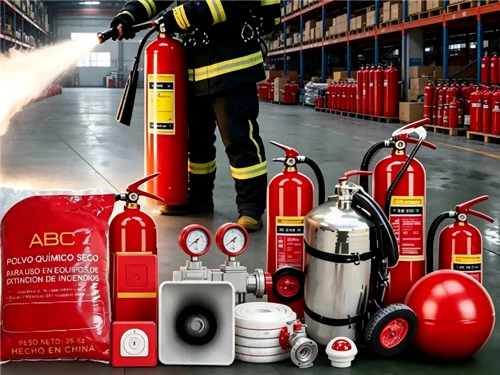
South America is a high-potential yet highly fragmented market for fire protection products. Unlike unified regulatory frameworks such as the EU CE system, each South American country maintains its own certification, labeling, customs and technical rules for portable fire extinguishers. Many importers face cargo detention, customs rejection, extra testing fees or sales bans simply because they only follow general international standards without checking local mandatory requirements.
This practical checklist is tailored for South American distributors, hardware wholesalers, construction contractors and private-label buyers. It covers pre-order verification, product technical specs, certification, packaging, dangerous goods logistics and post-arrival compliance. Working with Weimin Fire Protection, buyers can use this list to align with our engineering and QC team before production and shipment.
- 1. Confirm Country-Specific Mandatory Certifications First
- 2. Select the Right Extinguishing Agent and Fire Rating for Local Hazards
- 3. Pressure Vessel & Component Inspection Checklist
- 4. Labeling, Marking & Language Compliance
- 5. QC & Sampling Plan Before Shipment
- 6. Dangerous Goods Logistics & Customs Documentation
- 7. Commercial & After-Sales Terms Checklist
- Final Summary
1. Confirm Country-Specific Mandatory Certifications First
Certification is the top priority and varies widely across South American territories. A product approved for one country cannot automatically be sold in a neighboring nation.
Brazil
INMETRO certification is compulsory for portable fire extinguishers, following ABNT NBR 15808. The certificate is model-bound and linked to the manufacturer. Importers must register with INMETRO, and each batch may be subject to customs inspection. The fire rating, agent formula and cylinder design shown on the certificate must match the finished product exactly. Generic EN or UL test reports cannot replace INMETRO approval for local sales.
Argentina
Products need to meet IRAM standards and go through local type approval. Many buyers also need S-mark certification. Local language labels and technical datasheets in Spanish are required. Customs often cross-check the importer registration number against product documentation.
Chile
Chile accepts recognized third-party approvals but enforces strict compliance with NCh fire standards. Imported extinguishers must pass document review by the fire authority. Spanish operating instructions and permanent cylinder markings are mandatory.
Colombia, Peru, Ecuador, Bolivia
These markets commonly accept EN 3 series certification as a base, yet many require a local conformity assessment or prior prototype review before large-volume import. Bolivia, for example, asks for cylinder pressure test reports and manufacturer qualification files. Some regional ports carry random physical sampling and fire-performance spot checks.
2. Select the Right Extinguishing Agent and Fire Rating for Local Hazards
South America covers diverse climate zones and risk scenarios: tropical high-humidity coastal cities, highland cold regions, mining zones, oil and gas facilities, large agriculture warehouses, commercial malls and residential buildings. Agent selection cannot rely only on popular choices from Europe or North America.
- ABC dry chemical (MAP base): The most versatile option for general retail, offices, hotels and residential projects. Confirm the powder grade (90%, 75% or 40% monoammonium phosphate) and anti-caking treatment. High humidity in Brazil, Colombia and Peru makes moisture control especially critical.
- BC dry chemical: Preferred for gas stations, mining workshops, chemical storage and fuel yards.
- CO₂ extinguishers: Widely used for server rooms, electrical substations and industrial control panels. Note that CO₂ units bring stricter dangerous goods shipping rules.
- Foam and water-based extinguishers: Mainly for Class A fire risks in construction sites and large public venues; buyers must check local acceptance of water-based types.

Fire ratings such as 4-A:20-B:C must come from official fire tests, not printed arbitrarily on labels. Many South American fire departments audit rating claims during market surveillance. Also confirm operating temperature range. Units for Amazon Basin regions need to sustain high ambient heat, while units for highland areas such as Bolivia and southern Chile need low-temperature tolerance.
3. Pressure Vessel & Component Inspection Checklist
As a pressurized safety device, the cylinder, valve and internal parts are heavily scrutinized by both certification bodies and local customs labs. Share this part with Weimin's technical team during sample confirmation.
Cylinder
- Drawn steel material certificate and batch traceability available for inspection
- Wall thickness consistent with the approved technical file
- Hydrostatic pressure test: 1.5 × maximum working pressure, held for at least 60 seconds, no leakage or permanent deformation
- Burst pressure meets local standard requirements
- Permanent stamping on cylinder body: working pressure, test pressure, manufacturer code, production batch. Stick-on labels are not accepted as permanent marks in most South American countries.
- Internal anti-corrosion lining, especially for humid coastal destinations
Valve Assembly
- Forged brass valve body is the standard for long shelf life; low-cost alloy or plastic valves often fail local field inspections
- NBR sealing rings with stable aging resistance
- Calibrated pressure gauge, safety pin and tamper seal intact
- Dip tube matched to the extinguishing agent type to avoid incomplete discharge
Extinguishing Powder (for dry chemical models)
- Moisture content ≤0.25%
- Siliconized anti-caking and water repellent treatment
- Particle size, bulk density and fluidity test reports per batch
- Electrical insulation test report for ABC powder used on live electrical fires

All test records must be issued by a qualified lab and can be provided in Spanish or English as required by your customs broker.
4. Labeling, Marking & Language Compliance
Nearly every South American market requires Spanish or Portuguese labels, and bilingual labels are often rejected if local language text is too small or incomplete. This is one of the most frequent reasons for cargo hold-up.
Mandatory label information checklist:
- Legal manufacturer name (Weimin Fire Protection as the producer)
- Importer's local registered name, address and tax ID
- Model number, agent type and filling weight
- Clear fire classification and fire rating
- Step-by-step operation instructions in local language
- Operating temperature range
- Maintenance, recharge and hydrostatic retest interval
- Hazard warning symbols
Important notes:
- Do not copy label layouts or rating statements from local competitors without test support. False marking may lead to product seizure and fines.
- Label material must resist high humidity, UV exposure and abrasion. Ordinary paper stickers degrade rapidly in tropical climates.
- Artwork should be fully reviewed and signed off before label printing. Modifications after production create waste and shipping delays.
5. QC & Sampling Plan Before Shipment
Certification approves the design, but every batch still needs inspection. Weimin recommends a three-stage QC workflow for South American orders:
If your end buyers are large construction groups, fire service contractors or retail chains, you may also request ISO 9001 factory audit reports from Weimin.
6. Dangerous Goods Logistics & Customs Documentation
Portable fire extinguishers are classified as UN 1044, Class 2.2 non-flammable compressed gas. South American customs and shipping lines enforce IMDG rules strictly.
Logistics checklist:
- UN-certified outer packaging (carton or wooden case)
- Outer box marked with Class 2.2 hazard diamond, UN 1044, shipping mark and destination port
- Complete dangerous goods declaration (DGD)
- Commercial invoice, packing list, bill of lading, certificate copies and batch test reports
- Confirm with your freight forwarder whether the destination port accepts limited-quantity exceptions for small-size extinguishers
- CO₂ extinguishers need extra advance confirmation; some shipping lines restrict CO₂ cargo to selected vessel schedules
Many South American ports require documents to be notarized or apostilled. Confirm this requirement with your local broker early, because apostille processing takes extra time.
7. Commercial & After-Sales Terms Checklist
Before signing the OEM contract with Weimin, clarify these points to avoid disputes:
- Whether Weimin can support private labeling under the target country's certification
- Mold and label artwork ownership, modification fees and MOQ
- Market protection / exclusivity agreement if needed
- Warranty scope and spare parts supply (valves, gauges, seals)
- Service manual and recharge guidance in Spanish or Portuguese for your local service team
- Lead time for re-certification if you change model specs later
Final Summary
Importing fire extinguishers into South America is not a simple cross-border hardware purchase. The core challenge lies in fragmented local standards, humid and hot climate conditions, strict customs document reviews and Spanish/Portuguese labeling rules.
With this checklist, you can align all requirements with Weimin Fire Protection before production starts. The safest import route follows this sequence: confirm country certification → lock agent and rating → verify cylinder and component specs → approve local-language label → schedule multi-stage QC → prepare dangerous goods papers and apostille files. Skipping any of these steps can delay your shipment or block your products from being sold legally in the market.
When you share your target country, order volume and customer type with our team, Weimin can provide a customized compliance package, including suitable certification paths, label templates and test documentation.