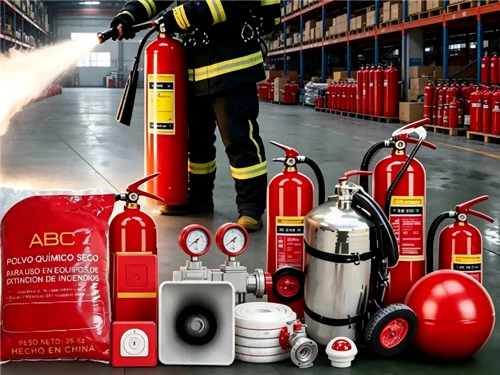
Warehouses and industrial facilities face different fire risks depending on the materials stored, production processes, electrical systems, building layout, and daily operating activities. A warehouse storing packaged consumer goods may require a different protection strategy from a metalworking plant, chemical storage facility, or manufacturing workshop.
For facility managers, safety officers, contractors, and procurement teams, selecting fire safety equipment involves more than purchasing extinguishers and installing alarms. Each item must address a defined hazard, comply with applicable regulations, remain accessible during an emergency, and fit the facility's maintenance capabilities.
A well-planned equipment selection process helps organizations reduce fire-related risks, protect employees and assets, limit operational disruption, and meet their fire protection obligations.
- 1. Identify the Fire Risks Before Choosing Equipment
- 2. Match Fire Extinguishers to the Fire Hazards
- 3. Select a Fire Detection and Alarm System for the Operating Environment
- 4. Evaluate Fixed Fire Suppression Systems
- 5. Include Fire Hose Reels, Hydrants, and Water Supply Equipment
- 6. Protect Electrical Rooms and Specialized Equipment
- 7. Consider Fire Safety Equipment for Hot Work and Daily Operations
- 8. Check Environmental Durability and Equipment Compatibility
- 9. Evaluate Suppliers and Manufacturers Before Bulk Purchasing
- 10. Build a Procurement Checklist for the Whole Facility
- Conclusion
1. Identify the Fire Risks Before Choosing Equipment
The first step is to understand what could ignite, how a fire could spread, and which areas require the fastest response. Equipment selected without a site-specific risk assessment may leave important hazards unprotected or provide unsuitable protection for the materials involved.
Warehouse Fire Risks
Warehouses commonly contain combustible packaging, pallets, textiles, paper products, plastics, and stored goods. High storage racks can allow flames and heat to spread vertically, while narrow aisles may restrict access for emergency responders. Charging stations for forklifts and electrical distribution equipment can introduce additional ignition risks.
Key assessment points include:
- Types and quantities of stored materials
- Maximum storage height and rack arrangement
- Aisle widths, exit routes, and emergency access
- Electrical rooms and battery-charging locations
- Flammable-liquid storage and handling areas
- Outdoor storage, loading docks, and waste collection points
Industrial Facility Fire Risks
Industrial facilities may involve hot work, furnaces, cutting and welding, combustible dust, hydraulic systems, flammable liquids, or high-power electrical equipment. These processes can require specialized detection, suppression, ventilation, or isolation arrangements.
For example, a welding workshop may need controls for sparks and hot materials, while a facility handling combustible dust requires a specific assessment of dust ignition and explosion hazards. Ordinary portable extinguishers alone cannot address every industrial fire scenario.
The risk assessment should therefore identify the fire hazards, potential consequences, required response time, and suitable protection measures before procurement begins.
2. Match Fire Extinguishers to the Fire Hazards
Portable fire extinguishers provide first-response protection for suitable incipient fires. However, different extinguishing agents have different applications and limitations. Selecting the correct type is more important than choosing a larger unit without considering the hazard.
The fire classifications and permitted applications vary by jurisdiction and product standard. Buyers should use the classifications and ratings specified by local regulations and the extinguisher's certification.
Consider More Than Extinguisher Capacity
A larger extinguisher is not automatically the best choice. Procurement teams should consider the certified fire rating, expected fire risk, operator capability, equipment weight, accessibility, and maintenance requirements.
For warehouse projects, the required number, type, placement, and travel distance to extinguishers should be determined according to applicable codes and a competent fire risk assessment. Extinguishers should be visible, accessible, properly mounted, and protected from damage.
Staff must also be trained to recognize when a fire is beyond the scope of portable equipment. If the fire is spreading, smoke is affecting escape routes, or safe operation cannot be assured, personnel should evacuate and activate the emergency response procedure.
3. Select a Fire Detection and Alarm System for the Operating Environment
Fire detection equipment provides early warning and can initiate emergency responses before a fire grows beyond the capabilities of first-response equipment. The appropriate system depends on the building's height, airflow, storage arrangement, environmental conditions, and fire development characteristics.
Smoke Detection
Smoke detectors may be suitable for many warehouse and industrial spaces, but conventional point detectors can be less effective in certain high-ceiling environments or areas where airflow and dust affect smoke movement. Their positioning and type should be selected through a system design process rather than based solely on floor area.
Heat Detection
Heat detectors may be appropriate in locations where normal operations produce dust, steam, or other conditions that make smoke detection difficult. Their response characteristics must be suitable for the expected fire scenario and ambient temperature.
Aspirating and Beam Detection
Large warehouses and high-bay storage facilities may benefit from specialized detection approaches. Aspirating smoke detection samples air through a pipe network, while beam smoke detection monitors changes in a projected light path across a space. Each has installation, maintenance, and environmental considerations.
The design should account for roof height, racking, obstructions, ventilation, and maintenance access. Detection devices must be compatible with the alarm control system and tested according to the applicable requirements.
4. Evaluate Fixed Fire Suppression Systems
Portable equipment is only one part of an industrial fire protection strategy. Depending on the hazard and building design, a facility may require fixed suppression systems that detect or control fires across a larger area.
Automatic Sprinkler Systems
Sprinklers are commonly used for building fire protection, including many warehouse and industrial applications. System design must account for the commodity, packaging, storage height, rack configuration, ceiling height, and other conditions that influence fire growth.
A sprinkler arrangement suitable for low-level storage may not provide adequate protection for high-piled combustible goods or certain specialized storage conditions. The system type, water supply, hydraulic design, and installation should therefore be evaluated against the applicable fire code and recognized design standards.
Specialized Suppression
Certain hazards may require additional or alternative systems. Examples include clean-agent systems for selected enclosed equipment spaces, foam systems for specific flammable-liquid hazards, and engineered suppression systems for specialized industrial processes.
No single suppression technology is appropriate for every environment. Selection should consider the fire scenario, potential damage to equipment, occupancy, ventilation, environmental impacts, and the requirements of relevant authorities.
5. Include Fire Hose Reels, Hydrants, and Water Supply Equipment
In facilities where a water-based firefighting system is required, hose reels, hydrants, pumps, tanks, valves, and associated pipework must be coordinated as part of the overall design.
Fire Hose Reels
Fire hose reels can provide a readily accessible water supply for suitable fire scenarios where their use is permitted. Buyers should confirm hose length, hose diameter, operating pressure, nozzle arrangement, mounting method, and compliance with local requirements.
The reel must be positioned so that users can access it without obstruction. Routine inspection should cover the hose, nozzle, valve, drum, and water supply.
Hydrants and Fire Pumps
Hydrants and fire pumps support firefighting operations and must deliver the required water flow and pressure under the specified operating conditions. Procurement teams should review demand calculations, pump duty, power supply, backup arrangements, and testing requirements.
These systems must be designed and commissioned by qualified professionals. Product selection alone does not establish that the complete water-based fire protection system will perform as intended.
6. Protect Electrical Rooms and Specialized Equipment
Electrical distribution rooms, control panels, server rooms, battery-charging areas, and process-control spaces can contain valuable equipment and distinct fire hazards.
The selection process should consider both the ignition source and the consequences of using an extinguishing agent. CO2 extinguishers may be suitable for certain electrical equipment and flammable-liquid risks, but they are not a universal solution for all electrical or industrial fires. Electrical isolation, safe access, ventilation, and the risk of re-ignition must also be considered.
Where sensitive equipment requires fixed suppression, a qualified designer should assess whether a clean agent or another engineered system is appropriate. Battery energy storage systems and lithium-ion battery incidents require particular care because thermal runaway may continue or recur after visible flames are suppressed.
Warning signs, emergency isolation procedures, suitable detection, and staff training should accompany the selected equipment.
7. Consider Fire Safety Equipment for Hot Work and Daily Operations
Fire hazards can also arise from routine maintenance and temporary work. Welding, grinding, cutting, and other hot-work activities may generate sparks that ignite packaging, dust, insulation, or nearby combustible materials.
A suitable hot-work control process may include:
- A formal hot-work permit where required
- Removal or protection of combustible materials
- Suitable fire extinguishers and trained personnel
- Inspection of adjacent spaces and concealed areas
- A defined fire-watch period based on the risk assessment and applicable procedures
Portable fire blankets may be useful for certain small, suitable fires or localized protection tasks, but they should not be treated as a substitute for hot-work controls or appropriate extinguishing equipment. Their material, size, intended application, and relevant product standards should be verified before use.
8. Check Environmental Durability and Equipment Compatibility
Industrial environments can expose equipment to moisture, dust, vibration, impact, chemicals, and temperature variation. Equipment intended for a clean indoor office may not be suitable for an exposed loading dock or a corrosive production area.
Before procurement, assess the following:
Fire extinguisher cabinets, hose reels, and other accessories should also be selected for their intended environment. For example, a polyethylene cabinet may be suitable for certain moisture-exposed locations, but its dimensions, UV resistance, impact performance, and compliance should be confirmed for the specific installation.
9. Evaluate Suppliers and Manufacturers Before Bulk Purchasing
Once the required equipment has been identified, procurement teams should assess whether potential suppliers can deliver the exact products, documentation, and quantities needed.
Technical Documentation and Certification
Request model-specific technical data sheets, applicable certificates, test reports, installation instructions, and maintenance requirements. Verify that documents cover the actual model and manufacturing site being supplied.
Quality Control
Ask how incoming materials, production processes, assembly, testing, and final inspection are controlled. For pressure-containing equipment such as fire extinguishers, relevant testing and traceability are especially important.
Production and Delivery Capacity
Confirm minimum order quantities, production lead times, packaging arrangements, export documentation, and the supplier's ability to support repeat orders. If a project requires several equipment categories, check each category individually rather than assuming the supplier has equal capability across all products.
Total Cost of Ownership
Compare not only the purchase price but also installation, commissioning, inspections, servicing, replacement parts, training, and future compliance costs. A lower initial quotation may not represent the lowest lifetime cost if the equipment is difficult to maintain or unsuitable for the application.
10. Build a Procurement Checklist for the Whole Facility
A structured checklist helps project teams connect identified hazards with the equipment needed to manage them.
This checklist should be adapted to the facility's risk assessment, building design, insurance requirements, and local regulations. It does not replace a professional fire protection design or approval from the relevant authority.
Conclusion
Selecting fire safety equipment for warehouses and industrial facilities requires a coordinated assessment of fire hazards, building conditions, equipment performance, and regulatory obligations. Portable extinguishers, detection systems, alarms, sprinklers, hose reels, hydrants, and specialized suppression systems each serve different functions and must work together as part of an overall protection strategy.
For facility owners and procurement teams, the most effective approach is to define the hazards first, specify the required performance, verify compliance, assess installation and maintenance needs, and compare suppliers using consistent criteria. This process helps reduce procurement errors and supports a fire protection system that is suitable for the facility's actual operating conditions.
The final equipment selection and system design should be reviewed by competent fire protection professionals and comply with the applicable local fire codes and standards.