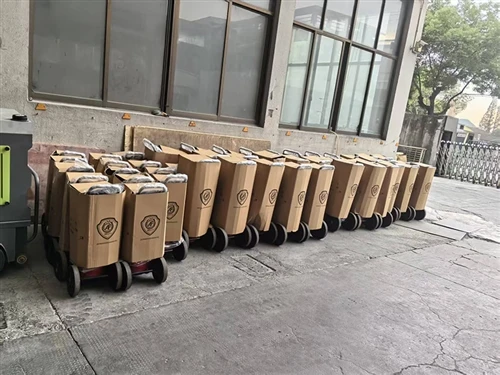
For fire safety equipment distributors, choosing the right purchasing model is an important part of building a sustainable product business. Some buyers prefer standard fire extinguishers with established specifications, while others need OEM products with customized branding, labels, and packaging.
Neither option is automatically better. The right choice depends on a distributor's sales model, target market, brand strategy, order volume, and product requirements.
For importers and wholesalers planning bulk purchases, understanding the differences between standard and OEM fire extinguishers can help reduce purchasing risks, improve product consistency, and support long-term business development.
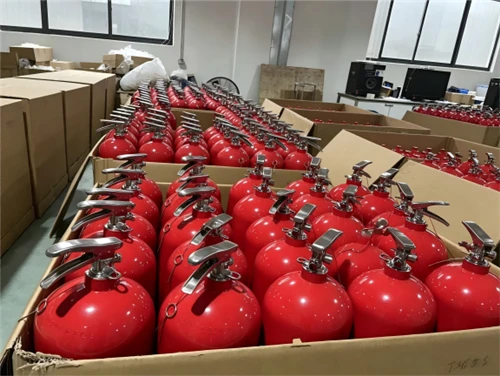
Understanding Standard and OEM Fire Extinguishers
Before comparing the two options, distributors should understand what each purchasing model involves.
What Are Standard Fire Extinguishers?
Standard fire extinguishers refer to products offered in a supplier's existing product range with established specifications and configurations.
Depending on the supplier, these products may include ABC dry powder fire extinguishers, CO2 fire extinguishers, and other conventional extinguisher types in different capacities.
Buyers generally select from available models rather than developing a customized product configuration.
Standard products are suitable for distributors who want to purchase established product specifications for regular wholesale sales, project supply, or inventory replenishment.
What Are OEM Fire Extinguishers?
OEM fire extinguishers are supplied according to an agreed customer specification and branding requirement.
Depending on the product and supplier's capabilities, customization may include:
Branding: Customer logos and brand identification.
Product Labels: Customized product labels and language versions.
Packaging: Retail packaging, cartons, and shipping marks.
Product Configuration: Selected models and specifications from the supplier's available range.
Documentation: Product information and supporting documents agreed upon for the order.
OEM cooperation does not necessarily mean developing a completely new extinguisher. Many distributor projects involve applying a customer's brand and packaging requirements to an established product model.
Any change affecting product design, performance, or certified configuration must be reviewed separately before production.
When Should Distributors Choose Standard Fire Extinguishers?
Standard fire extinguishers are a practical option when buyers prioritize established specifications and straightforward purchasing arrangements.
Suitable for Regular Wholesale Supply
Distributors selling conventional fire safety equipment may already have a customer base that purchases commonly used extinguisher types and capacities.
Selecting products from an existing range can simplify product selection and reduce the need for additional branding or packaging coordination.
Suitable for Testing Market Demand
When entering a new market or introducing an additional product category, buyers may prefer to start with established models.
This allows distributors to evaluate local demand, customer preferences, and sales performance before investing in a customized product program.
Suitable for Buyers Without Their Own Brand Strategy
Not every wholesaler needs private-label products. Some distributors focus on supplying contractors, retailers, industrial customers, or project buyers who select products according to technical requirements rather than brand identity.
For these businesses, standard products may be sufficient.
Important purchasing consideration: Standard specifications do not automatically mean that products are in stock or ready for immediate shipment. Buyers should confirm current availability, production schedules, and delivery arrangements with the supplier.
When Should Distributors Choose OEM Fire Extinguishers?
OEM fire extinguishers are more suitable for distributors who want greater control over their brand presentation and product identity.
Build a Recognizable Product Brand
For wholesalers and regional distributors developing their own product lines, customized logos and labels help establish a consistent brand image across their fire safety products.
This is particularly relevant when a distributor sells through multiple channels, such as local dealers, retail networks, and commercial supply projects.
Adapt Product Information to the Target Market
Fire extinguisher labels and packaging need to communicate essential product information clearly.
Depending on the destination market, buyers may need specific language versions, product descriptions, identification details, and other required information.
OEM cooperation provides an opportunity to coordinate these requirements before mass production.
However, customized artwork must not replace or contradict mandatory product information, approved markings, or applicable certification requirements.
Maintain Consistency Across Product Lines
Distributors sourcing several types of fire safety equipment may want consistent branding, packaging, and identification across their product range.
An OEM arrangement can help coordinate these elements across selected products, subject to each model's technical and certification limitations.
Support Long-Term Brand Development
For distributors with established sales channels, private-label products can provide a more distinctive market position.
Instead of relying entirely on generic product presentation, buyers can develop a product range under their own brand and build a more consistent relationship with local customers.
OEM vs Standard Fire Extinguishers: Key Differences
The following comparison helps distributors evaluate the two purchasing options.
| Purchasing Factor | Standard Fire Extinguishers | OEM Fire Extinguishers |
|---|---|---|
| Product selection | Existing product range | Agreed models and specifications |
| Branding | Supplier's standard identification | Customer branding, where permitted |
| Labels | Existing label format | Customized artwork and language options |
| Packaging | Standard packaging | Agreed packaging and carton requirements |
| Product development | Generally limited | Depends on the customization scope |
| Order preparation | Fewer customization steps | Requires artwork and specification confirmation |
| Brand positioning | Suitable for general distribution | Supports private-label business |
| Documentation | Documents for the selected model | Documents must match the actual OEM configuration |
| Lead time | Depends on stock and production schedule | Includes customization and production coordination |
The main difference is not necessarily the extinguisher's quality or performance. It is the level of customization and the purchasing arrangements.
A standard extinguisher can meet the buyer's technical requirements, while an OEM extinguisher must meet the same applicable product requirements in addition to the agreed branding and packaging specifications.
How Should Distributors Make the Right Choice?
Before selecting a purchasing model, distributors should consider their business objectives and actual order requirements.
Choose Standard Products If:
- You sell established extinguisher models to wholesale customers.
- Your customers prioritize product specifications over brand customization.
- You want to evaluate demand before launching a private-label range.
- You do not currently need customized labels or packaging.
- You prefer to select from an existing product range.
Choose OEM Products If:
- You operate under your own fire safety equipment brand.
- You supply products through a network of dealers or retailers.
- You need customized logos, labels, or packaging.
- You want consistent brand presentation across selected product categories.
- You have a clear long-term purchasing plan for customized products.
Consider a Combined Purchasing Strategy
Some distributors do not need to choose only one option.
For example, a wholesaler may purchase standard fire extinguishers for general customers while ordering OEM products for its own branded distribution channels.
This approach allows buyers to serve different customer groups without requiring every product to follow the same purchasing arrangement.
The key is to keep product specifications, labels, documentation, and order requirements clearly separated for each model and order.
What Should Buyers Confirm Before Placing a Bulk Order?
Whether purchasing standard or OEM fire extinguishers, distributors should review the following points before confirming an order.
Product Specifications
Confirm the extinguisher type, capacity, dimensions, cylinder material, operating pressure, applicable fire ratings, and other model-specific technical details.
Specifications should be documented and approved before production.
Certification and Market Requirements
Ask which product models are covered by the available certificates or approvals.
Check the certificate holder, model identification, applicable standard, validity, and any restrictions on product configuration or labeling.
A supplier's quality management certification should not be treated as a substitute for product-specific certification.
For example, UL Solutions identifies product-specific testing and certification requirements for different extinguisher types, including CO2 and dry chemical models. Buyers should therefore verify the actual model and applicable certification rather than relying on a general statement that a supplier offers certified products.
Branding and Label Artwork
For OEM orders, confirm logo files, label dimensions, language versions, artwork approval, and packaging details.
Both parties should approve the final artwork before mass production.
Minimum Order Quantity and Lead Time
Ask whether the MOQ differs between standard and customized orders.
Confirm the production schedule, sample arrangements, packaging preparation time, and estimated shipment date. These details may vary by product model and customization requirements.
Quality Inspection
Agree on the inspection points before production begins.
Depending on the product, inspection may cover appearance, component assembly, pressure-related checks, filling records, labeling, and packaging.
The inspection plan should reflect the product specifications and applicable quality requirements.
How Does an OEM Fire Extinguisher Order Work?
A clear order process helps reduce misunderstandings between distributors and suppliers.
Step 1: Define Product Requirements
The buyer identifies the required extinguisher types, capacities, models, quantities, target market, and technical requirements.
Step 2: Confirm Customization Details
Both parties discuss logo placement, label artwork, language, packaging, carton markings, and other agreed customization requirements.
Step 3: Review Samples and Documents
Where required, the buyer reviews samples, product specifications, artwork, and relevant certification documents before approving the order.
Step 4: Arrange Production and Quality Checks
Production follows the confirmed order specifications. Inspection activities are carried out according to the agreed quality requirements.
Step 5: Confirm Packaging and Shipment
Before dispatch, the supplier and buyer coordinate packaging, order quantities, shipping documents, and transportation arrangements.
This process helps ensure that the delivered products correspond to the approved specifications and branding requirements.
OEM and Standard Fire Extinguisher Supply Support from Weimin Fire
Shaoxing Weimin Fire Fighting Equipment Co., Ltd. supplies conventional fire safety equipment for overseas importers, wholesalers, and distributors.
The company's product range includes ABC dry powder fire extinguishers, CO2 fire extinguishers, and related fire safety products such as fire extinguisher cabinets and fire blankets.
For buyers who need standard products, Weimin Fire can provide product options from its existing range for specification review and bulk purchasing discussions.
For OEM projects, the company supports agreed customization requirements such as customer logos, product labels, colors, packaging, and related order details, subject to the selected model and project requirements.
Weimin Fire's quality management system is certified to ISO 9001. The company has approximately 115 employees, including around 20 personnel involved in quality control and support, and exports products to more than 40 countries and regions.
For distributors evaluating a supplier, these company-level details provide useful background. However, product specifications, model-specific certifications, inspection requirements, MOQ, and lead time should still be confirmed for each order.
Whether you need standard fire extinguishers for wholesale distribution or OEM products for your own brand, defining your requirements clearly is the first step toward an efficient purchasing arrangement.
Frequently Asked Questions
1. Are OEM fire extinguishers better than standard fire extinguishers?
Not necessarily. OEM and standard refer to different purchasing arrangements, not different quality grades. Product quality depends on the actual specifications, materials, manufacturing controls, testing, and applicable certification.
2. Can I add my own logo to a standard fire extinguisher?
This may be possible if the supplier supports private-label customization and the proposed branding complies with applicable product marking and certification requirements. Confirm the permitted changes before placing an order.
3. Does OEM customization change the product certification?
It depends on the certification scheme and the changes involved. A logo or packaging change may have different implications from a change to the cylinder, valve, extinguishing agent, or product configuration. Buyers should obtain confirmation from the relevant certification body or responsible conformity assessment party.
4. Is the MOQ higher for OEM fire extinguishers?
It may be. Customized labels, packaging, artwork preparation, and production arrangements can affect the minimum order quantity. Ask the supplier to confirm the MOQ for each model and customization scope.
5. Can distributors purchase standard and OEM fire extinguishers together?
Yes, if the supplier can accommodate the requested models and order arrangements. Buyers should clearly specify which products are standard and which require OEM customization.
Discuss Your Fire Extinguisher Purchasing Requirements with Weimin Fire
Whether you are sourcing standard fire extinguishers for wholesale distribution or developing a private-label product range, Weimin Fire can discuss suitable product models and customization requirements based on your purchasing plan.
Contact our team to discuss your required extinguisher types, capacities, order quantities, target market, and OEM requirements.